Archives
- 2026-10
- 2026-09
- 2026-08
- 2026-07
- 2026-06
- 2026-05
- 2026-04
- 2026-03
- 2026-02
- 2026-01
- 2025-12
- 2025-11
- 2025-10
- 2025-09
- 2025-04
- 2025-03
- 2025-02
- 2025-01
- 2024-12
- 2024-11
- 2024-10
- 2024-09
- 2024-08
- 2024-07
- 2024-06
- 2024-05
- 2024-04
- 2024-03
- 2024-02
- 2024-01
- 2023-12
- 2023-11
- 2023-10
- 2023-09
- 2023-08
- 2023-06
- 2023-05
- 2023-04
- 2023-03
- 2023-02
- 2023-01
- 2022-12
- 2022-11
- 2022-10
- 2022-09
- 2022-08
- 2022-07
- 2022-06
- 2022-05
- 2022-04
- 2022-03
- 2022-02
- 2022-01
-
br Materials and methods br Results
2022-04-07
Materials and methods Results Discussion The innate immune system plays an important role in protecting against IAV infections. However, the virus has the ability of escaping the innate immune system. Activating or enhancing an innate immune response before or during a viral infection will
-
Recently it has been found that
2022-04-07
Recently, it has been found that treatment of human phagocytic Progesterone mg or microvascular endothelial cells with NO donors inhibited the O2− generating capacity of NADPH oxidase [[8], [9], [10], [11]], which may involve down-regulation or S‑nitrosylation of the p47phox subunit (a cytosolic su
-
An important example of a frame is
2022-04-07
An important example of a frame is the lattice of open subsets of any topological space X. The correspondence is clearly functorial (by taking inverse images), and consequently one has a contravariant functor with the category of topological spaces and continuous maps as domain category. The fun
-
br Introduction Few decades after of HIV AIDS
2022-04-06

Introduction Few decades after of HIV/AIDS diagnosis, it has been still a health problem and impact will continue in the next decades. In 2015, HIV/AIDS was the 12th cause of death in the world and it's estimated that 1.2 million people was died of HIV/AIDS this year. In the global epidemiologica
-
CF patients can suffer from a
2022-04-06
CF patients can suffer from a multitude of hepatobiliary problems including gall stones, hepatitis, steatosis and cirrhosis. Hepatobiliary problems are common in pediatric CF patients with reported prevalence rates up to 25% [12,13]. Cystic fibrosis related liver disease (CFLD) was thought to develo
-
The dramatic increase in the development of EAAT inhibitors
2022-04-06
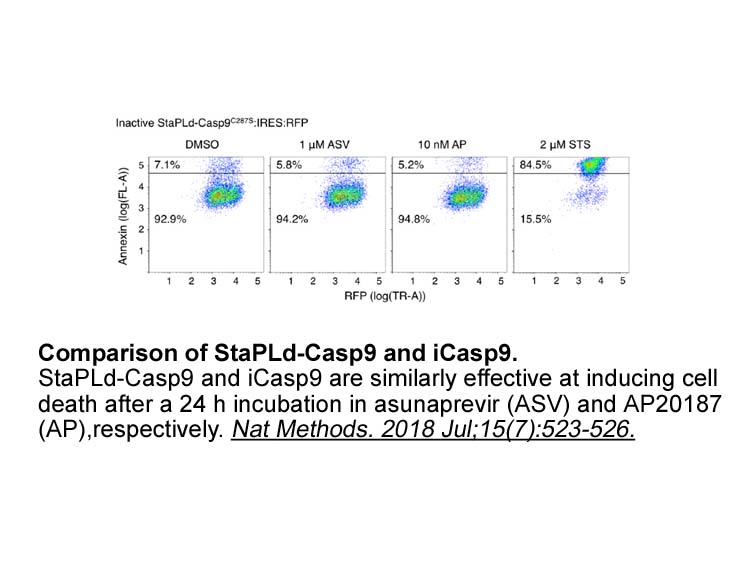
The dramatic increase in the development of EAAT inhibitors and substrates over the last several years can likely be attributed to a number of experimental advances. Firstly, the isolation of the individual EAAT clones allowed each subtype to be selectively examined in well-characterized expression
-
Sorafenib sale In conclusion we demonstrated that
2022-04-06
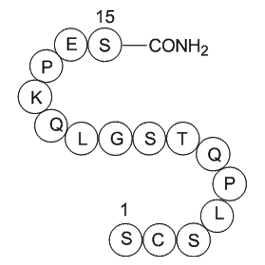
In conclusion, we demonstrated that extrasynaptic glutamate could in situ affect the AA metabolism via brain CYPs. CYP1B1 and CYP2U1 genes in the astrocytes are the downstream genes of CREB, and the up-regulation of CYP1B1 and CYP2U1 expression by glutamate was due to the increases in phosphorylated
-
LPCs have been previously described as potential anti diabet
2022-04-06

LPCs have been previously described as potential anti-diabetic factors due to stimulation of secretory activity from the isolated rodent pancreas, L-type cells, ands insulin-producing cell lines, with LPC 18:1 as the main structure of interest (Soga et al., 2005, Sakamoto et al., 2006, Overton et al
-
Glutamate aspartate transporters or excitatory amino acid tr
2022-04-06
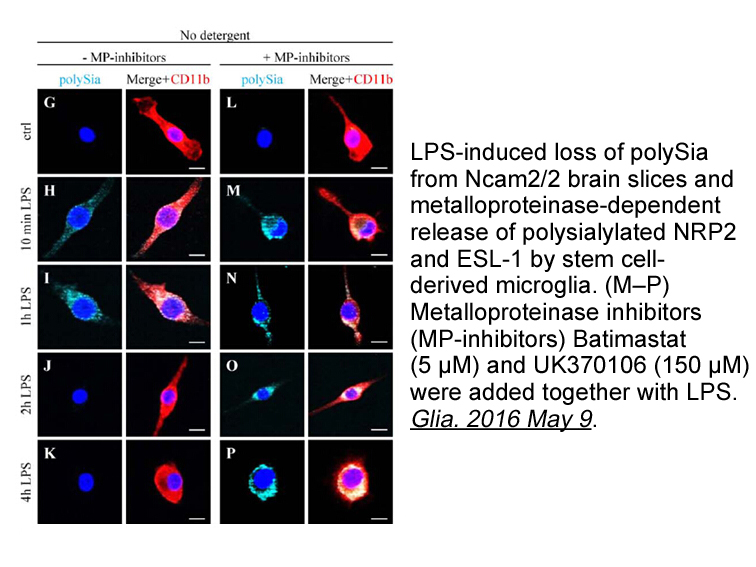
Glutamate-aspartate transporters or excitatory amino AN-2728 transporters (EAATs) are essential for the maintenance of glutamate homeostasis. EAATs are widely distributed in central neurons and glial cells (Danbolt, 2001, Martinez-Lozada et al., 2011). They are driven by Na + and K+ gradients (Jian
-
Recent studies revealed that synthetic oligomeric A decrease
2022-04-06
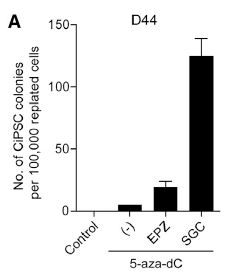
Recent studies revealed that synthetic oligomeric Aβ1-42 decreased GLT-1 expression and promoted mislocalization of GLT-1 from the cell surface of primary astrocytes, leading to glutamate dyshomeostasis in synapses (Abdul et al., 2009, Scimemi et al., 2013). To address the cause for reduction of ast
-
melk pathway Fig demonstrates placental amino acid transport
2022-04-06
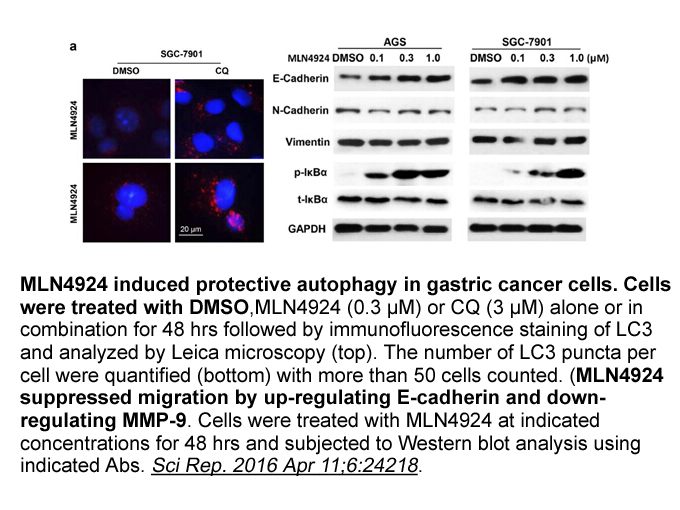
Fig. 7 demonstrates placental amino melk pathway transporter protein concentrations. While no change in the placental SNAT2 is effected in response to a high-fat diet in wt, a trend toward a reduction was seen in glut3 mice in response to a high-fat vs. chow diet (Fig. 7A and B). A high-fat diet did
-
To directly address whether pharmacological attenuation of p
2022-04-06
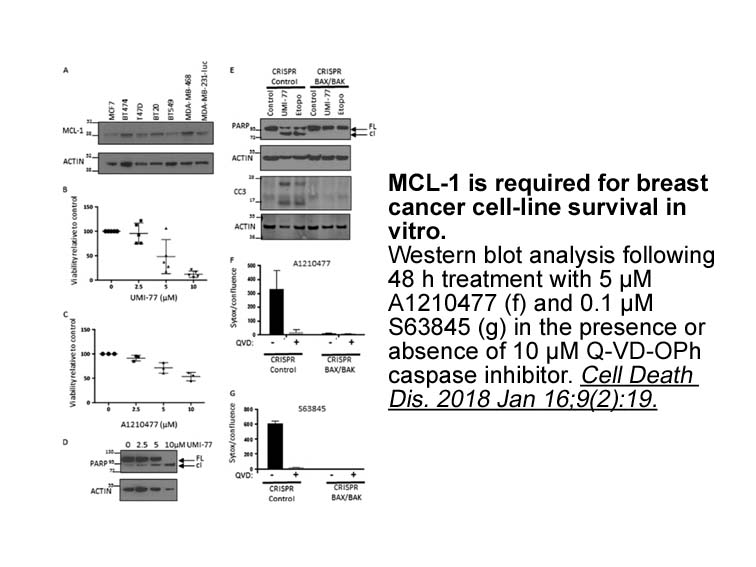
To directly address whether pharmacological attenuation of physiological GIP provides therapeutic benefits in obese mice, we pursued a selective long-acting antagonist to complement the work we report on GIPR agonism. We report a GIP analog of sufficient aqueous solubility that employs a shortened N
-
Although the ramifications of non additive SAR
2022-04-06

Although the ramifications of non-additive SAR are context-dependent, the knowledge that perturbations in one region of a chemical series are not synergistic with perturbations in another region of the same chemical series is clearly pertinent to any medicinal chemistry effort. In our experience, no
-
Ulimorelin also known as TPZ is a macrocyclic molecule
2022-04-06
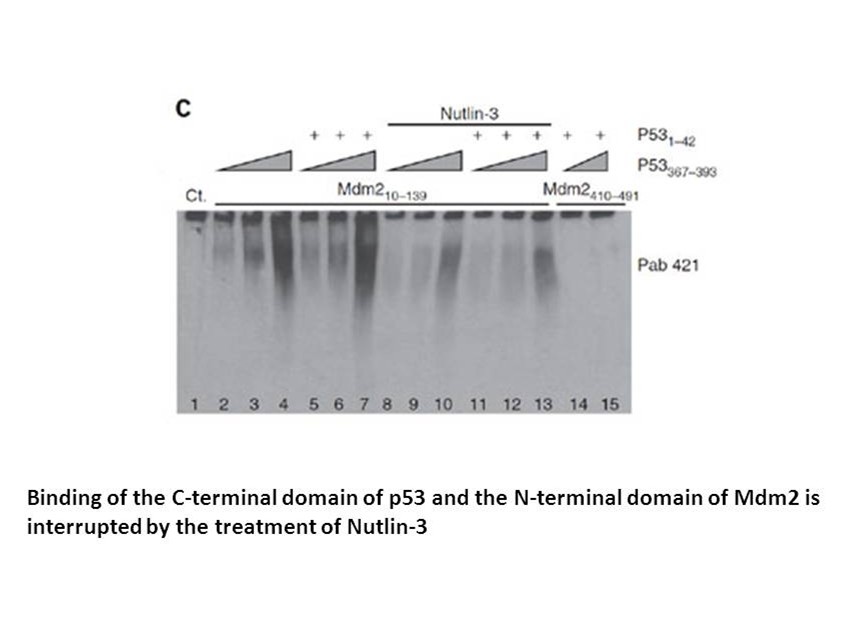
Ulimorelin, also known as TPZ101, is a macrocyclic molecule that is a potent agonist of the ghrelin receptor (Hoveyda et al., 2011). Due to its ability to stimulate gastrointestinal motility, ulimorelin has been evaluated as a possible treatment in gastroparesis (Ejskjaer et al., 2010), ileus (Fras
-
The effects of GHS R a blockade
2022-04-06
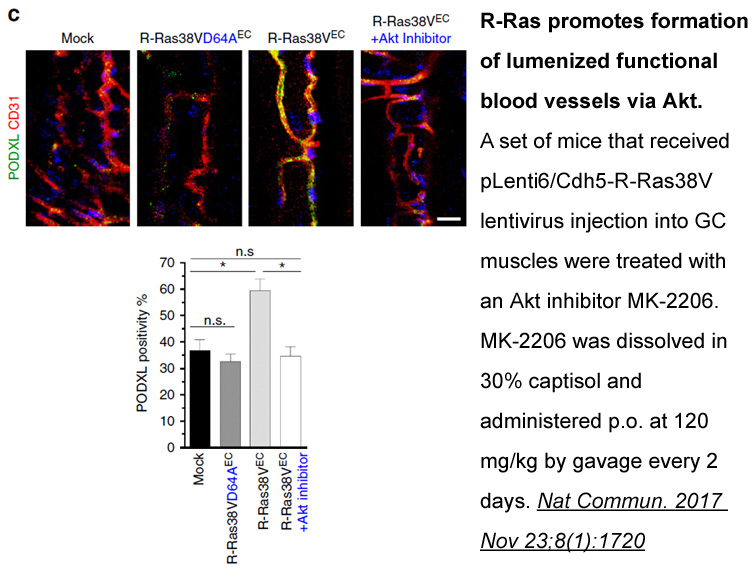
The effects of GHS-R1a blockade on alcohol-related outcomes have been examined in numerous preclinical experiments, utilizing various GHS-R1a antagonists (JMV 2959, [D-Lys3]-GHRP-6, BIM 28163) and rodent species (prairie vole, mouse, rat). In spite of methodological differences, the results consiste
7891 records 474/527 page Previous Next First page 上5页 471472473474475 下5页 Last page